Villa in the valley
_ Natural landscape boundary, becoming part of the house.


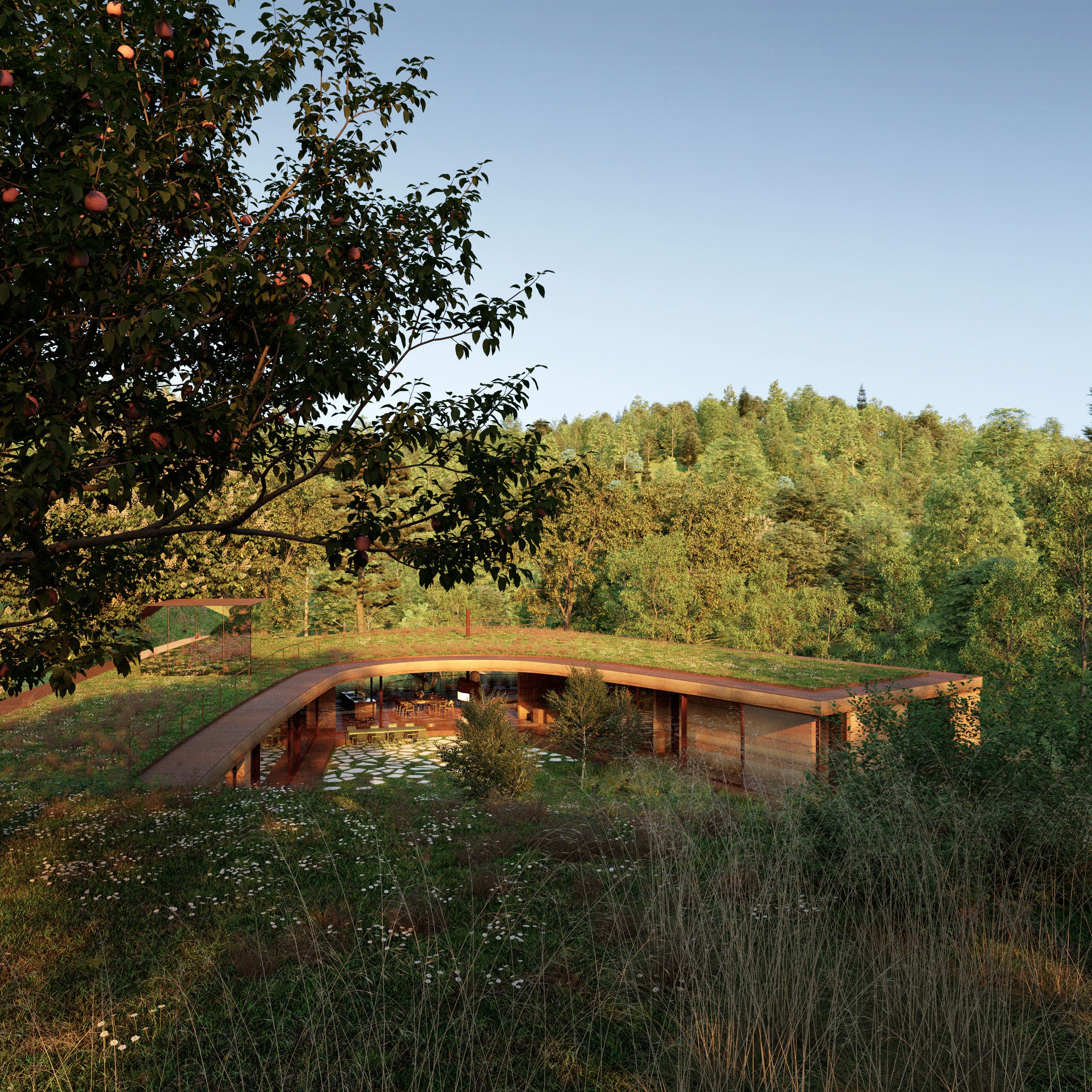
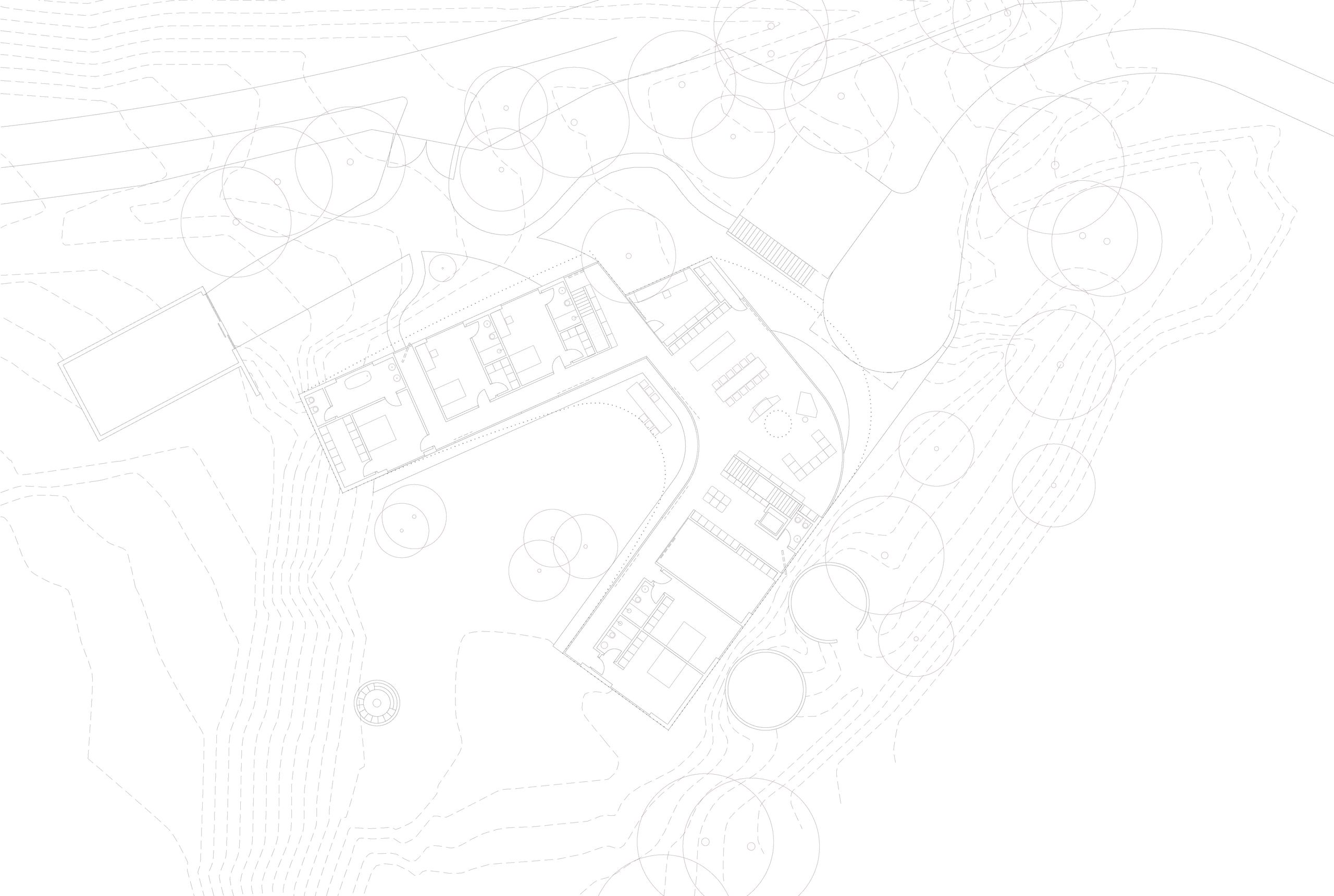
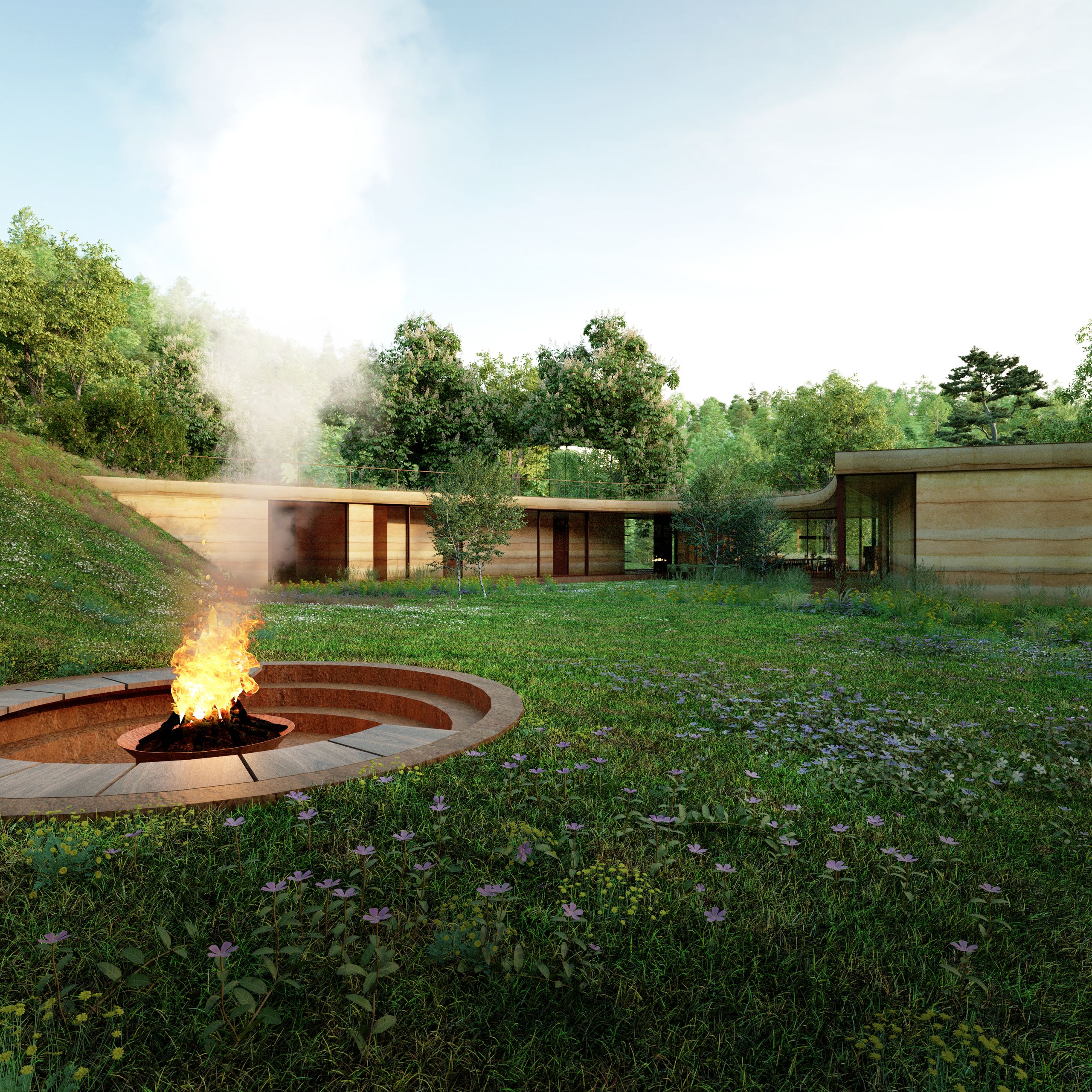
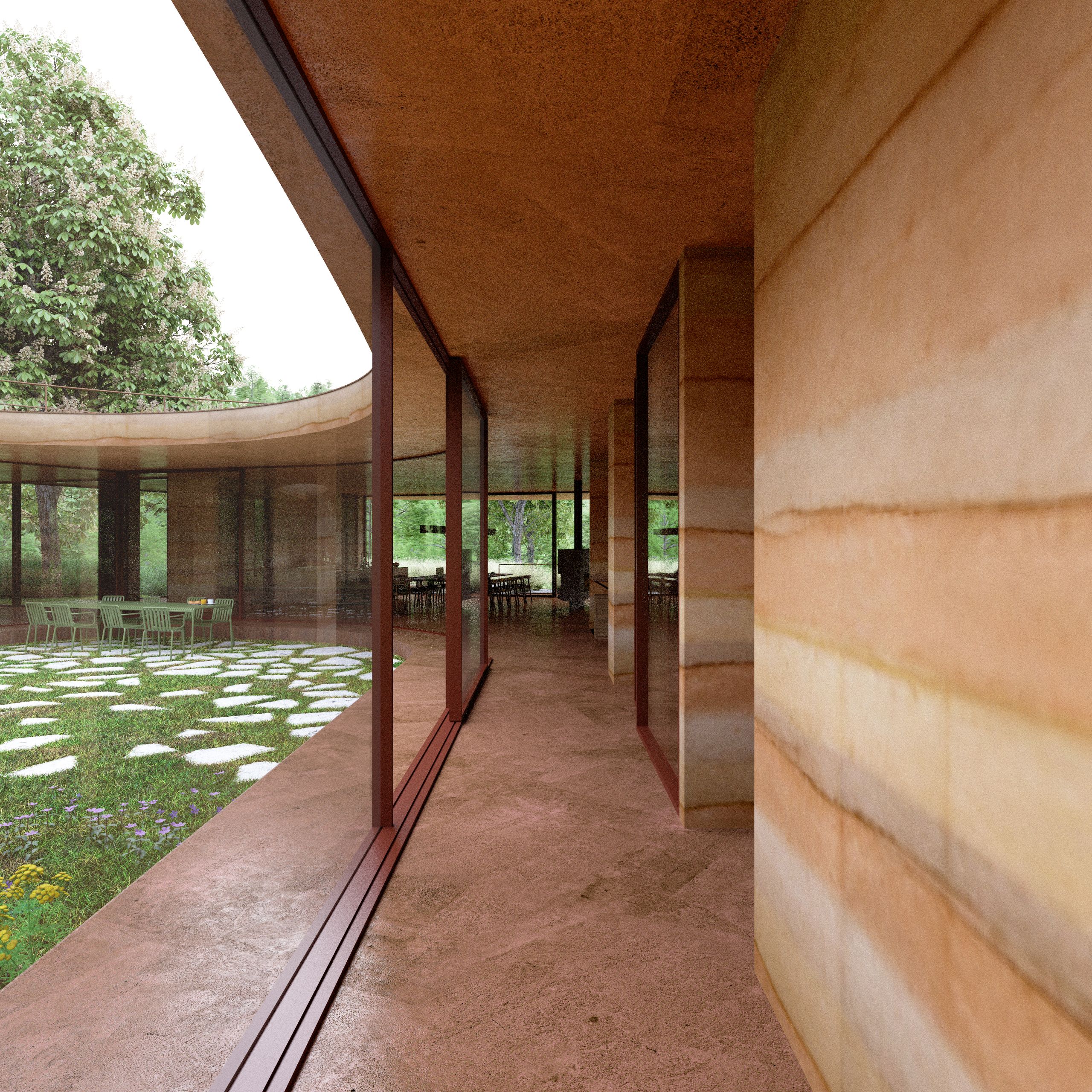
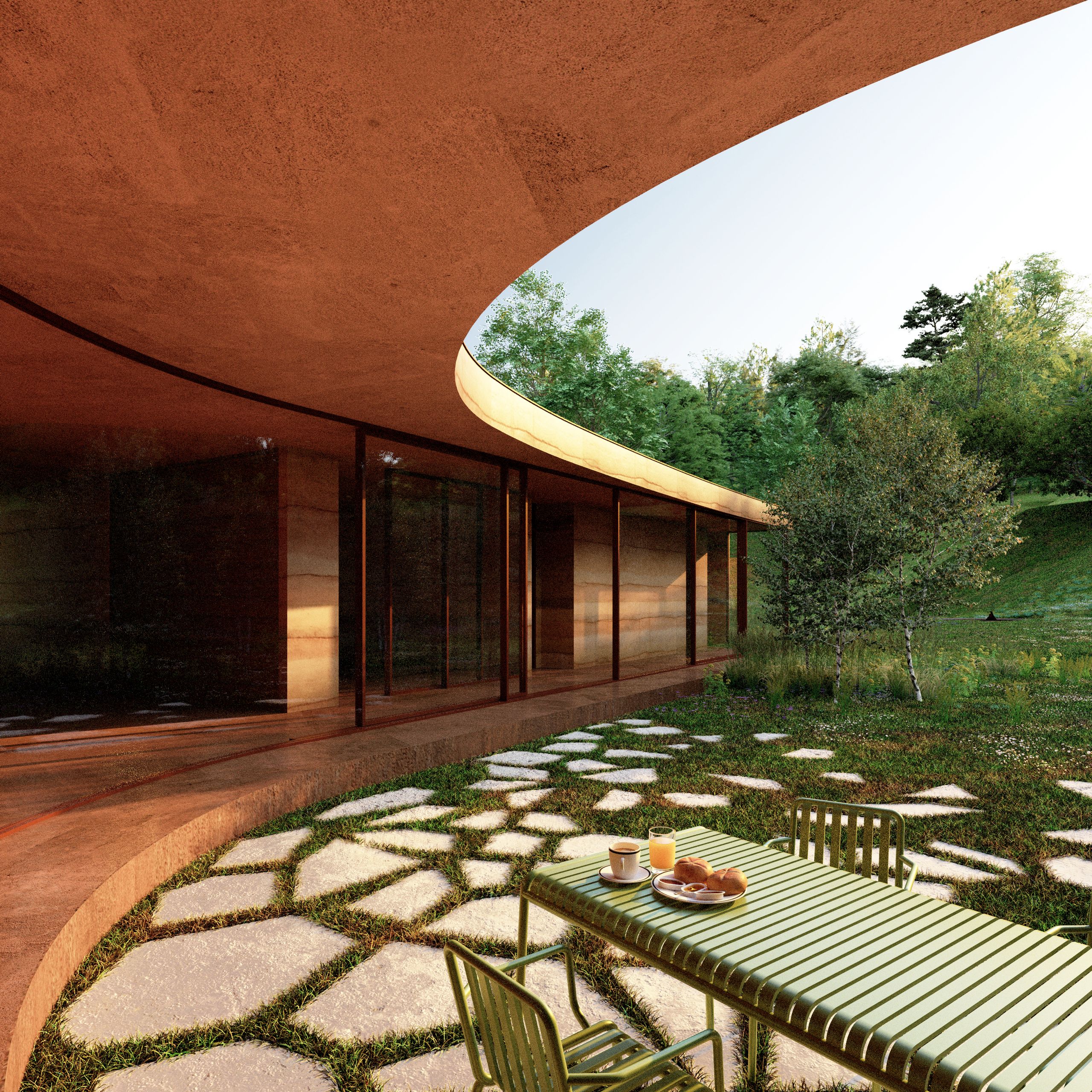
Seen from the garden, the house seems to be just an elongated part of it. The roof flows seamlessly into the hillside and its green carpet is dotted with wild meadow vegetation. The walls of the house, made of layered concrete with admixtures of clay pigments, seem to have been carved directly from the nearby hillside. The building’s ground-level linear mass also leaves a view of the opposite valley slopes from the garden.
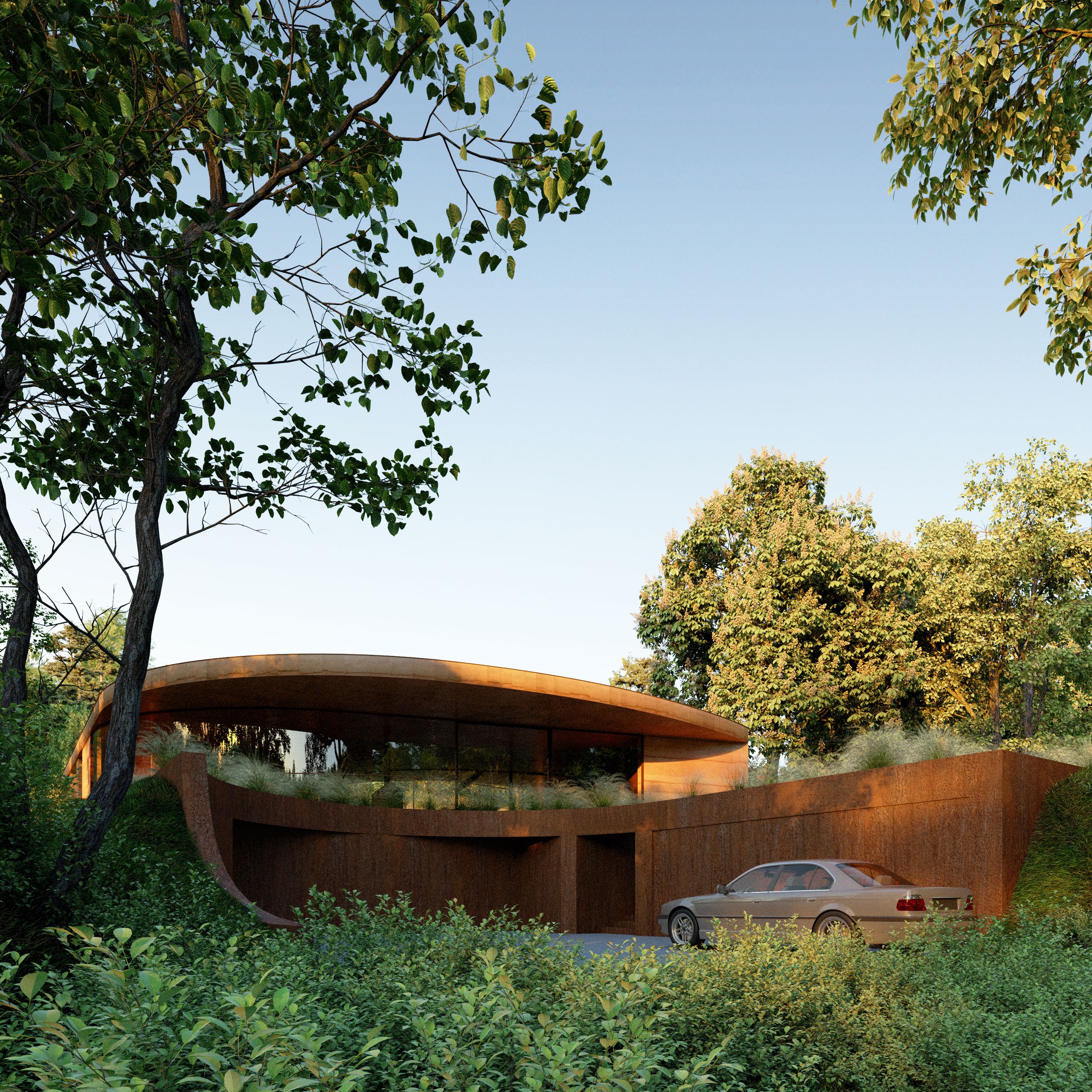
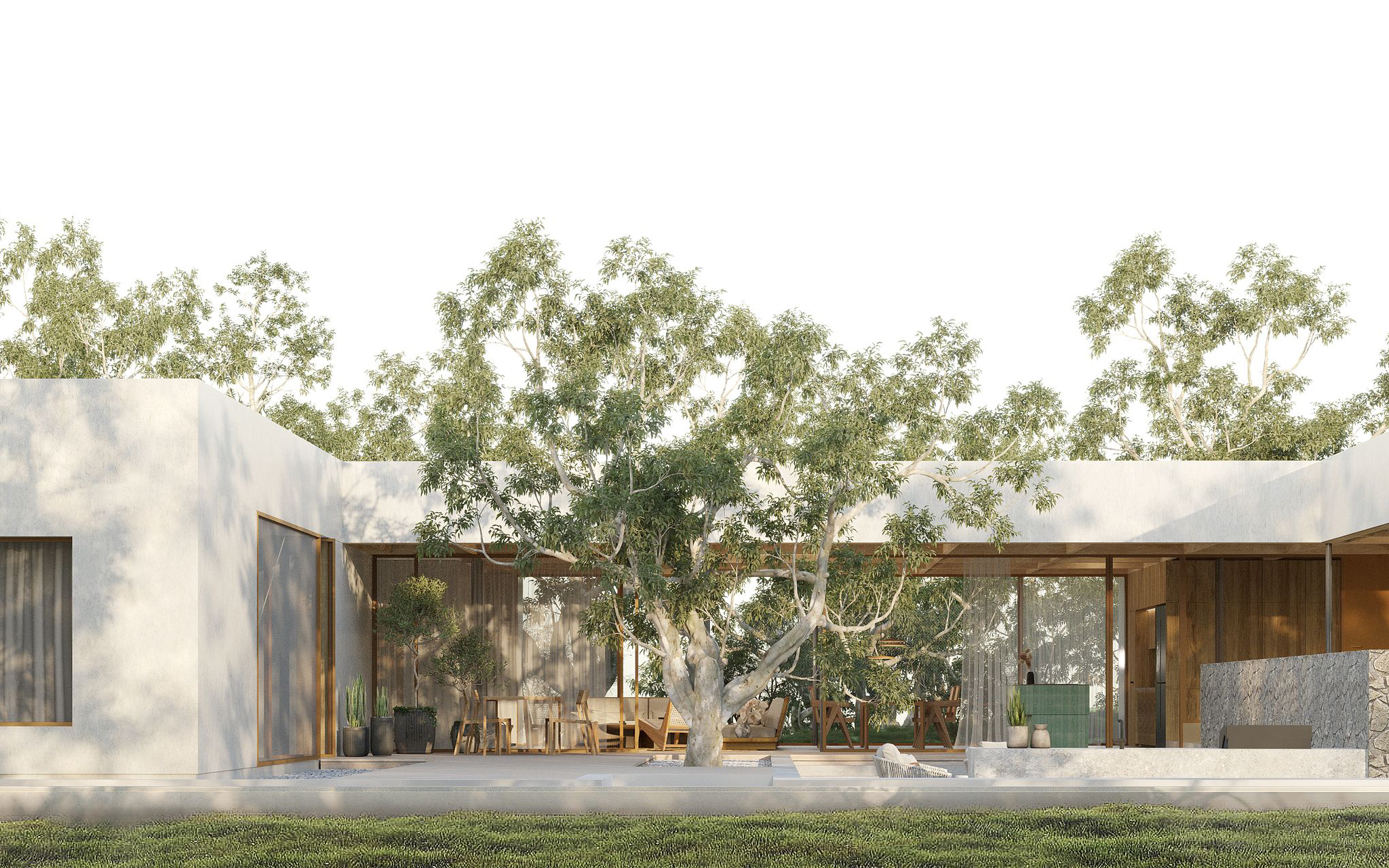
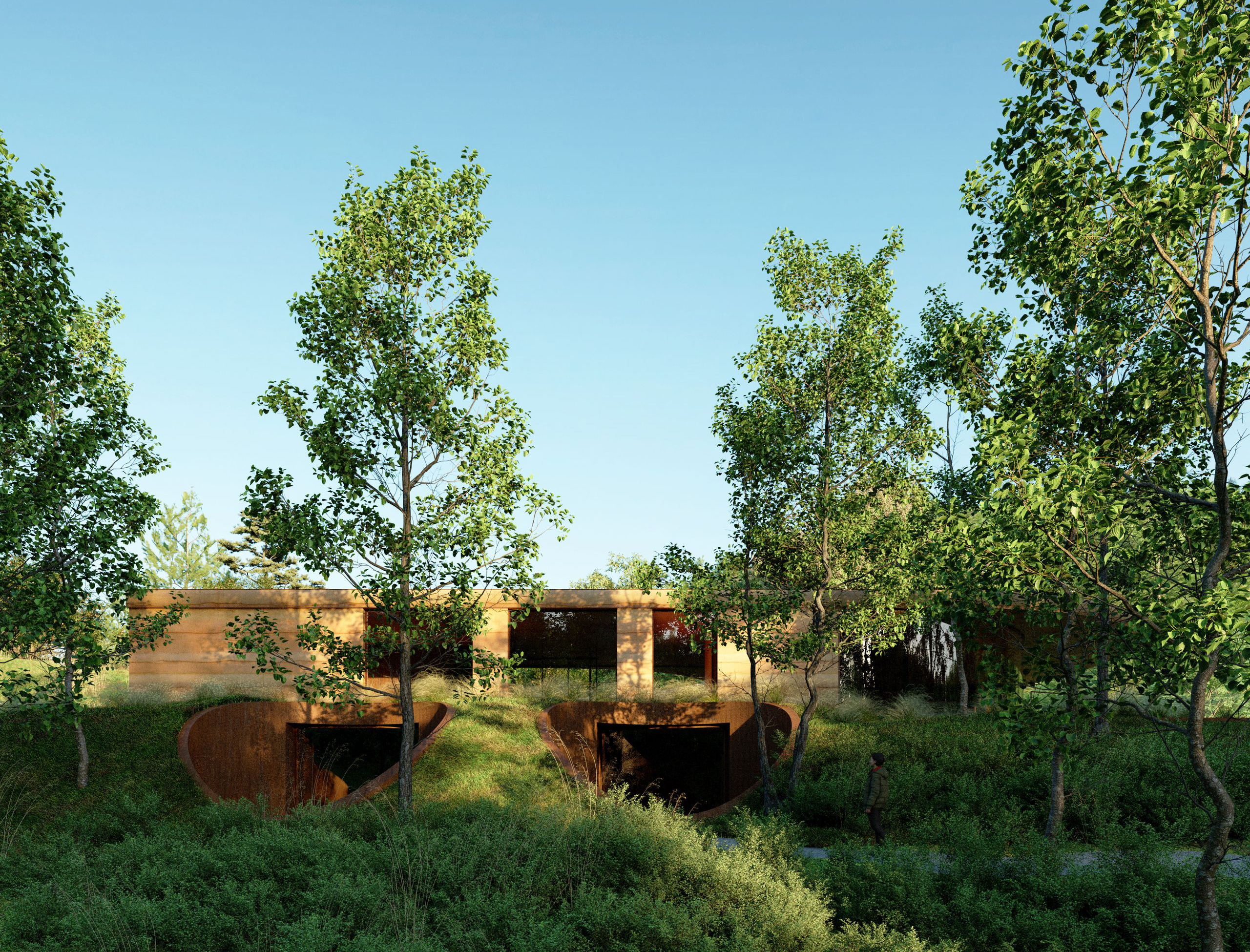
Even on arrival the house retains its character – ground floor, spread out, quiet. The bungalow-like expression remains intact, even as we approach by car. The living area seems to float above the plinth, which is deliberately detached – subtly but consistently. The lower section with the garages is earthier, coated in a noble patina of corten that blends with the soil and time. Above this serene base, behind generous glazing, the living room opens up. And further still, towards the terrace extends.
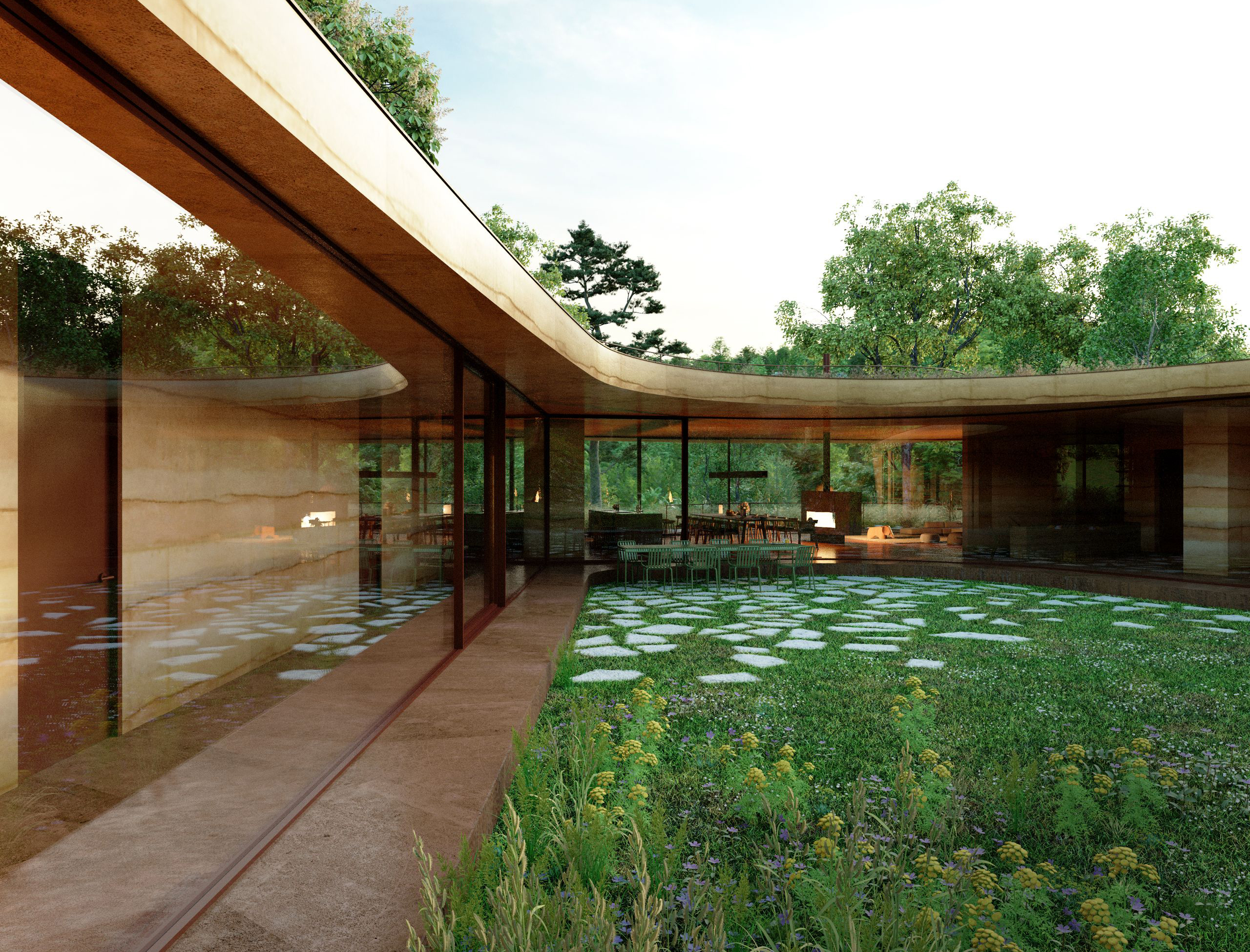
The courtyard is like the quiet heart of the house – protected, closed off from the surroundings, yet in dialogue with the landscape. Through the portholes that flash through the mass of the house, and especially through the large main window, one can see into the valley, where time flows in its own rhythm. Where the deck separates from the body of the house, it is narrowed by the planting of meadow perennials and seasonal flowers. A narrow throat, more symbolic than real – and beyond it the wild meadow already begins.